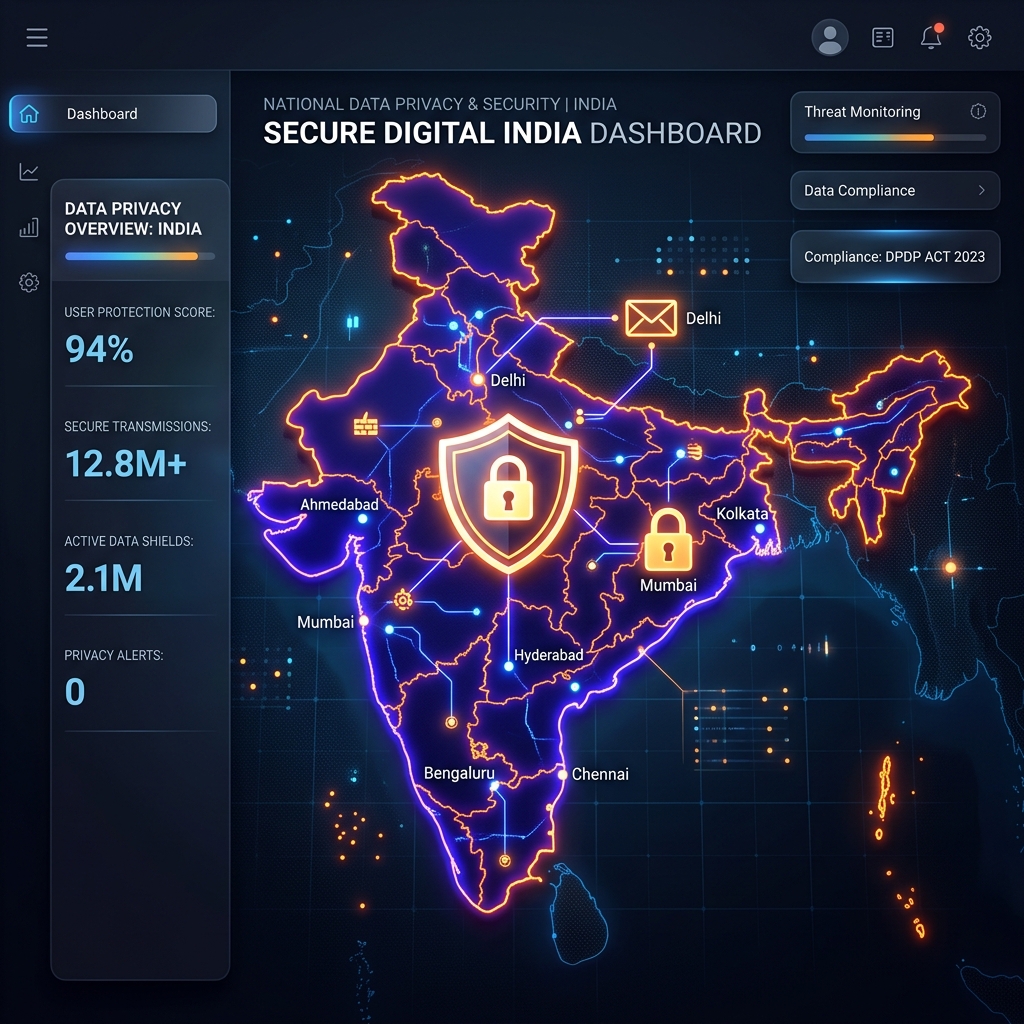
For internet users across India, the surge in digital services has brought undeniable convenience alongside an overwhelming surge in marketing solicitations. Whether you are ordering electronics on an e-commerce marketplace, searching for job openings, or registering for public Wi-Fi at a metro station, almost every Indian web portal demands your personal email address. Within hours, your primary inbox is often flooded with promotional offers, loan pitches, and third-party newsletter subscriptions.
At 30mail.in, we built our disposable email platform to give Indian consumers, developers, and job seekers a fast, reliable privacy shield. This guide explores the digital privacy landscape in India, how the Digital Personal Data Protection Act, 2023 (DPDP Act) impacts consumer rights, and how utilizing a disposable temporary email address keeps your personal inbox clean and secure.
Email Privacy and the Indian Regulatory Landscape
1. India's Digital Personal Data Protection Act, 2023 (DPDP Act)
Enacted by the Parliament of India in August 2023, the Digital Personal Data Protection Act, 2023 establishes a statutory framework for processing digital personal data. Under the Act, entities collecting personal data ("Data Fiduciaries") are legally required to obtain verifiable consent, provide clear notices detailing the purpose of data collection, and implement reasonable security safeguards.
While the DPDP Act empowers Indian citizens ("Data Principals") with rights to access, correct, and erase their personal data, enforcing these statutory rights across hundreds of commercial platforms requires extensive administrative effort. The most practical defense remains data minimization: preventing your permanent personal email address from entering commercial marketing databases in the first place.
2. Commercial Lead Generation and Data Aggregation in India
Your primary email address frequently serves as a centralized, persistent identifier linking your online footprints across multiple services. Once submitted to gated forms, real estate aggregators, or contest entries, contact details are frequently pooled into commercial lead generation networks. This leads to unsolicited marketing communications, promotional newsletters, and targeted advertising campaigns that clutter your personal inbox.
Everyday Scenarios Where Disposable Email Protects Indian Users
1. E-Commerce Discount Vouchers and First-Order Promotions
Many online shopping platforms in India offer promotional welcome discounts (such as ₹200 off your initial order or free shipping vouchers) in exchange for email registration. If you only intend to make a single purchase, submitting your permanent email address binds you to recurring marketing blasts. Generating an instant address on 30mail.in lets you receive your promo code within seconds, complete checkout, and prevent future promotional clutter.
2. Career Research and Exploratory Job Searches
When exploring employment opportunities across recruitment portals (such as Naukri, Foundit, or LinkedIn job groups), browsing company reviews, or downloading industry salary reports, platforms often mandate an email address. Submitting a primary address can trigger automated recruiter marketing sequences and third-party career course solicitations. A disposable email provides an effective privacy buffer for preliminary research.
3. Real Estate Portals and Property Inquiries
Browsing apartment listings or checking rental price trends on Indian property portals often gates detailed contact numbers and brochures behind an email sign-in. Once entered, automated CRM systems can trigger weekly automated emails and follow-ups. Using a temporary address allows you to evaluate listings without enduring high-pressure sales funnels.
4. Public Wi-Fi Access Points (Airports, Railway Stations & Cafes)
Public Wi-Fi networks at airports, railway stations, and public spaces routinely utilize captive portals requiring email validation before granting internet access. These contact requirements primarily exist to build local marketing databases. A temporary address fulfills the portal verification handshake immediately without exposing your private credentials.
5. Software Development, QA Testing & OTP Workflows
For India's engineering community, validating user registration workflows, transactional notifications, and verification tokens during development requires rapid access to clean email accounts. Developers can use 30mail.in inboxes to verify incoming emails in real time via WebSockets, testing delivery latency without managing dedicated secondary mailboxes.
Critical Exceptions: When You Must NEVER Use a Temporary Email
While temporary emails provide exceptional protection for transient online interactions, they must never be used for essential, legally mandated, or permanent accounts, including:
- Government Services & Identity Portals: Portals such as UIDAI (Aadhaar), Income Tax e-Filing (PAN services), Passport Seva, EPFO, and DigiLocker require permanent, legally verifiable communication channels.
- Banking and Financial Services: Net banking accounts, UPI applications, credit card portals, and SEBI-registered brokerage platforms (e.g., Zerodha, Groww) require permanent email records for regulatory statements and fraud alerts.
- Academic & Official Examinations: University registrations, entrance examinations (such as UPSC, JEE, or CAT), and official certification portals require continuous access for admit cards and scorecards.
How 30mail.in Protects Privacy
30mail.in operates on a privacy-first, ephemeral architecture designed specifically for rapid verification workflows:
- Zero Personal Registration: No phone numbers, names, or passwords are ever requested.
- RAM-Based Processing: Inbound messages exist in volatile memory buffers and are purged automatically when the timer expires.
- Receive-Only Protection: Outbound email capability is permanently disabled to prevent spam relay abuse.
📊 How Temporary Email Works: Step-by-Step Architecture Chart
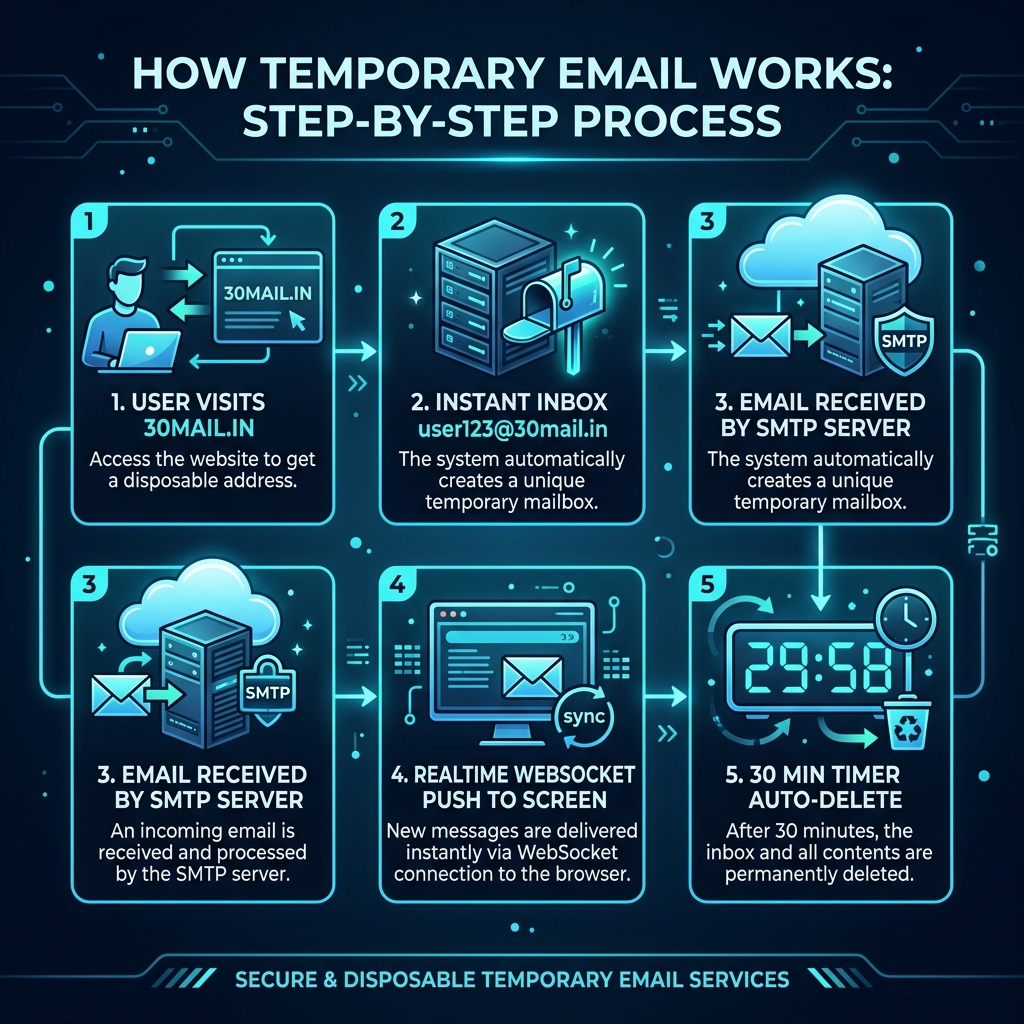
Architecture overview illustrating real-time WebSocket delivery and automatic memory deletion cycles at 30mail.in.
Frequently Asked Questions
Yes. Managing your digital inbox to prevent spam and protect your contact info from leaks is a recognized cybersecurity practice.
No. Official portals like Aadhaar, PAN, and passport services require permanent email addresses for official notices.