In the digital economy, personal consumer data is traded with algorithmic precision. Every time you register for an online discount, download an industry report, or access public Wi-Fi, commercial platforms harvest your contact details. In modern surveillance capitalism, the ultimate tracking anchor is your personal email address. Protecting this single credential is the most impactful, high-leverage action you can take to preserve your digital privacy and insulate your personal life from marketing clutter.
At 30mail.in, we champion practical, accessible digital self-defense. This guide outlines actionable strategies to shield your personal inbox from relentless promotional sequences, eliminate cross-site behavioral tracking, and construct a resilient digital perimeter.
Why Your Primary Email Address Represents a Major Privacy Liability
Unlike a physical mailing address or telephone number that can change over time, your primary personal email typically persists for decades. It functions as the master cryptographic anchor tied to your bank accounts, mortgage services, credit bureau monitoring, and professional networks. When you surrender your genuine email to an unverified commercial website, three distinct threats emerge:
- Algorithmic Cross-Platform Fingerprinting: Ad networks and consumer data brokers convert your email address into a SHA-256 cryptographic hash. This hashed identifier allows marketing platforms to correlate your anonymous web browsing sessions with your retail shopping receipts, physical geographic location, and demographic profile.
- Downstream Data Breaches & Credential Stuffing: Mid-tier and boutique e-commerce sites frequently maintain inadequate database security. When these platforms suffer breaches, your real email address and associated passwords are aggregated into public dark-web credential lists, exposing you to automated credential-stuffing attacks.
- Unstoppable Drip Marketing Campaigns: Even when platforms technically comply with federal CAN-SPAM regulations, enrolling in a single webinar or downloading one PDF often triggers automated 12-stage sales follow-up sequences that choke your inbox with persistent sales solicitations.
The Three-Tier Inbox Architecture for Bulletproof Email Hygiene
Rather than providing a single email address indiscriminately across every web form, security professionals recommend implementing a structured, three-tiered email hygiene framework:
Tier 1: High-Trust Personal & Financial Fortress (Permanent)
Reserve this primary address strictly for mission-critical, legally binding institutions: checking and savings accounts, retirement funds (401k, IRAs), government portals (IRS, Social Security), medical health systems (HIPAA portals), and immediate family members. Never enter this address into public web forums, retail sweepstakes, or commercial newsletters. Enforce hardware-key or authenticator-app two-factor authentication (2FA) across this account.
Tier 2: Controlled Semi-Permanent Subscriptions (Secondary Alias)
Utilize a dedicated secondary email address (or an alias service) for reputable, ongoing commercial relationships: Amazon, utility billing, verified news subscriptions, and professional career platforms. If this address ever begins receiving spam, you can easily trace the source or rotate the alias without disrupting your core financial communications.
Tier 3: Disposable Ephemeral Shield (30mail.in)
For unvetted web registrations, one-time coupon codes, public Wi-Fi logins, community forum discussions, and preliminary software evaluations, rely exclusively on on-demand inboxes from 30mail.in. The mailbox self-destructs after 10, 30, or 60 minutes, permanently extinguishing any incoming marketing broadcasts before they can ever reach your personal life.
Developer and QA Staging Protocols
For software engineers and quality assurance specialists testing complex user onboarding workflows, using real personal credentials introduces test contamination and compliance concerns. Developers can combine disposable inboxes from 30mail.in with our Synthetic US Profile Generator to safely validate form handling (US ZIP codes, state abbreviations, phone number masks) in staging environments without storing real customer PII.
Comprehensive Digital Self-Defense Checklist
Pairing temporary email with modern cybersecurity habits creates an impenetrable digital posture:
- Dedicated Password Management: Deploy an encrypted password manager to generate unique, 16+ character passwords for every service, ensuring a breach on one site never compromises your other accounts.
- Browser Privacy & Tracking Prevention: Configure privacy-focused browsers with native tracker blocking to prevent third-party telemetry scripts from fingerprinting your web sessions.
- Phishing Vigilance: Never click unverified links in unexpected emails. If an email claims to originate from your bank or utility, navigate directly to the official website via your browser bookmark rather than following email hyperlinks.
Conclusion
Reclaiming your online privacy does not require disconnecting from modern digital conveniences. By adopting a tiered communication strategy and leveraging ephemeral tools like 30mail.in for casual online interactions, you retain full access to web services while permanently safeguarding your personal identity.
📊 How Temporary Email Works: Step-by-Step Architecture Chart
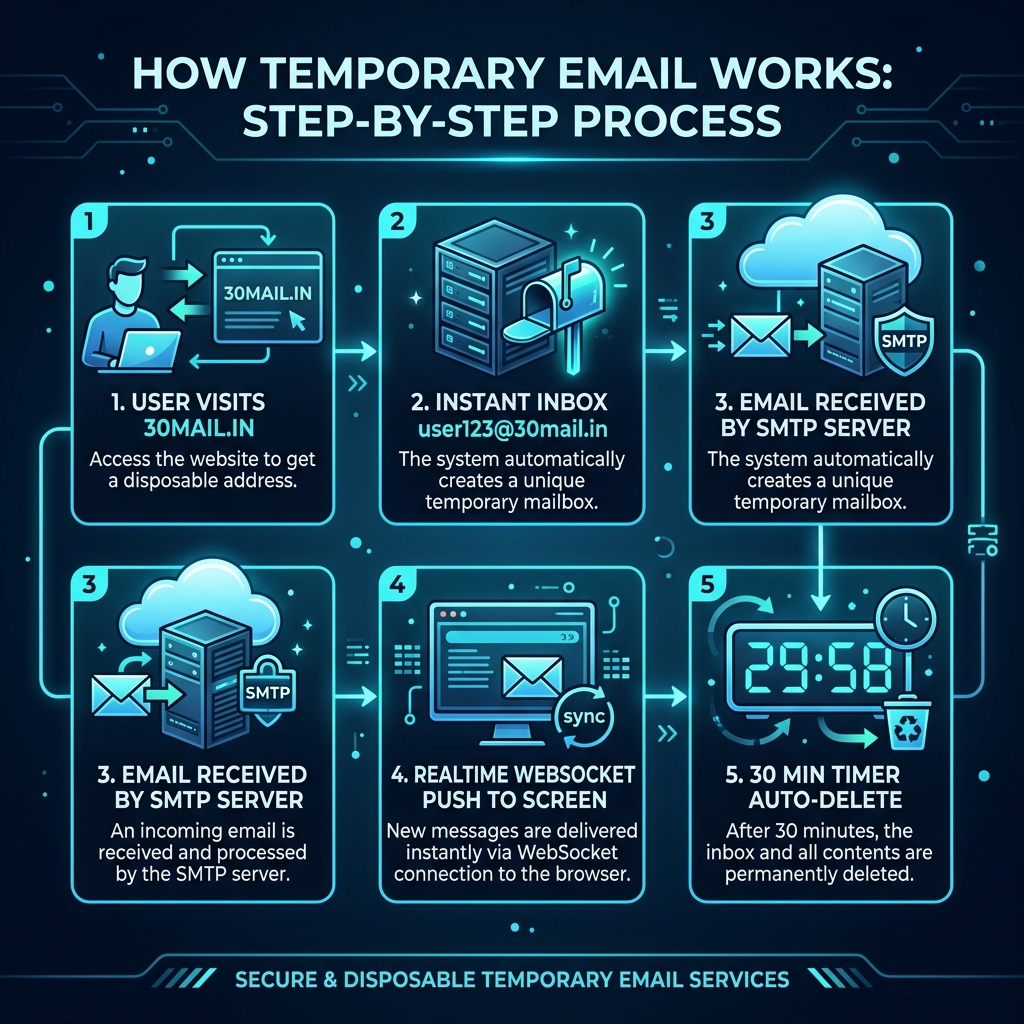
Architecture overview illustrating real-time WebSocket delivery and automatic memory deletion cycles at 30mail.in.
Frequently Asked Questions
Yes. Using privacy tools to shield your personal contact information from public exposure and spam is completely legal.
No. Never use temporary emails for banking, legal documents, or permanent accounts where you will need long-term access.